Interested in talking to an expert to learn how Temporal can help you?
Used by:
Four key differences you will find on Temporal:
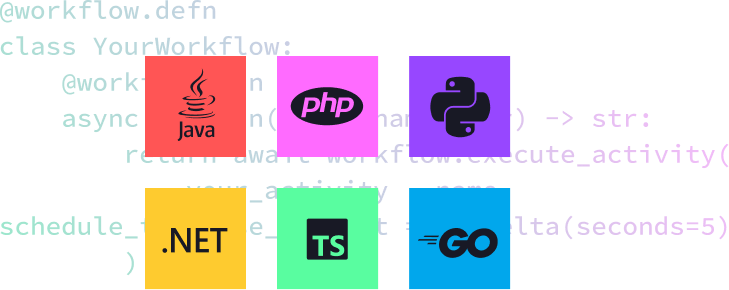
Code:Instead of executing processes that are defined in BPMN 2.0 (which does not directly execute code), Temporal workflows are written in native code, supporting 6 different languages.
Supply Chain:System test complexities are created when delivery is separate from your supply chain for other code in your application. Temporal fits within the existing SDLC.
Execution Model:You lose history and the ability to replay with stateless execution for individual process instances, and instance state for each is short-lived. Temporal has state management for the whole workflow & always retains the ability to replay.
Open Source:Temporal retains its OSS roots.
Users who switch to Temporal enjoy:
Code first flexibility: developers love flexibility and ease of integration into their systems. Temporal workflows are written in native code, instead of executing processes defined in BPMN, which severely limits developer flexibility.
Scale without issues:Temporal’s platform makes it easy to scale in the cloud without any latency issues.
Get started easily with open source:Temporal is fully open sourced which makes it easy to incrementally get started with just a few lines of code.
This is the left side content. Edit this in Marketo using the rich text editor.
This is the right side content. Edit this in Marketo using the rich text editor.